
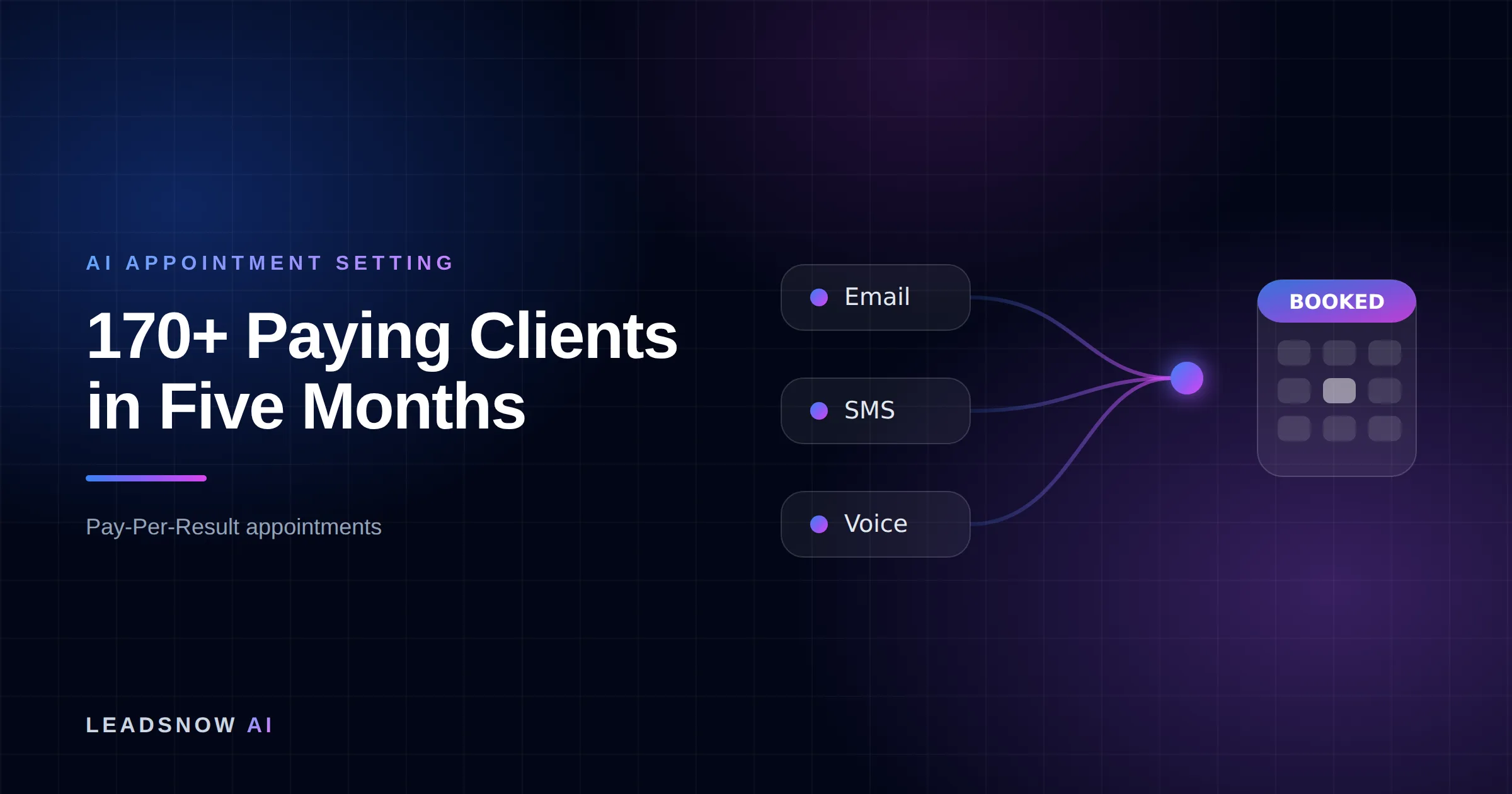
At a glance: Quinten Wiegers owns seven gyms across Europe. Five months before this interview was filmed, he partnered with More Gym Members (LeadsNow’s earlier gym-marketing brand) to launch a brand-new Living Well gym in Hasselt, Belgium — starting from absolute zero, with the walls still being built. Over the following months, 170+ people signed up for the gym’s paid six-week project (at about €200 each), and 72 of them had already been “flipped” into fixed monthly memberships by the time of filming, with around 50–55 more still working through the program. All figures on this page come straight from the filmed interview, as told on camera.
The numbers, as stated in the filmed interview
| Metric | Result |
|---|---|
| Six-week project sign-ups | 170+ (each paying about €200 to start) |
| Flipped into fixed monthly memberships | 72 (as of two weeks before filming) |
| Still working through the six-week project | About 50–55, with roughly 50% expected to flip into regular memberships |
| Lapsed sign-ups recovered by a five-day email sequence | 3 new members, plus 3 more after sharing member results |
| Bring-a-friend campaign | 8 sign-ups |
| Member community event | About 70 people attended |
| Starting point | Zero — the gym was still under construction, with no equipment, when the first four leads arrived on launch day |
How it works
How an AI sales agent books your appointments
Six channels feed in
Outbound email, SMS, voice and social — plus inbound search and AI referrals from our own AI SEO and chat agents.
Your list or CRM
Outbound starts from data you already own — past enquiries, dormant customers, or a targeted prospect list.
Qualified against your rules
Budget, timing and fit are checked before anything reaches your team, using criteria you set.
Booked into your calendar
Only qualified prospects reach the booking step, so your closers spend their time selling.
MAKE MORE SALES.
Pay-Per-Result pricing — We scale sales HARD aligned to your interests, better than anyone else.
Watch Quinten tell it himself
A note on the era: this campaign was delivered under More Gym Members, LeadsNow’s earlier gym-marketing brand, and the video was filmed in 2019. It predates the AI sales agents LeadsNow runs today — what you see here is the team’s earlier high-ticket fitness work: lead-generation campaigns, follow-up systems and accountability, exactly as described on camera.
Want this done for you? We book qualified sales appointments on a Pay-Per-Result basis — you only pay for calls that actually land in your calendar.
Why a seven-gym owner went looking for something different
Quinten Wiegers is no first-timer. At the time of the interview he owned seven gyms — the maximum number, he jokes, according to his wife. But when it came to launching a new club in Hasselt, Belgium, he wanted marketing that didn’t look like everyone else’s. In his telling, one company dominated the fitness business in Holland and everybody ran the same playbook, while markets like the US and Australia were further ahead with Facebook advertising.
“I was searching for somebody who could do a different thing in marketing and advertising on Facebook, because everybody was doing the same thing… I reached out to you to see if we could work together, and I did. It did very well.”
— Quinten Wiegers, Living Well
His mindset going in was simple: nothing to lose, so test it and see.
Leads before the walls were finished
The launch itself became a story Quinten still tells. He and Sophie, his business partner in Hasselt, were literally still building the gym — no equipment, no nothing — when the campaign went live.
“I said to her, well, I think the campaign is going live today, and then she looked on the phone, she said, oh, I already got four… First she said, well, we have to fix this wall. No, I said, no, no, first we got a call.”
— Quinten Wiegers, Living Well
Answering leads before fixing walls became the routine — and, as Quinten puts it on camera, it’s working.
If we can’t make you money, we don’t deserve yours.
Pay-Per-Result pricing — performance-based alignment.
From challenge sign-ups to fixed memberships
The model, as described in the interview: leads come in from Facebook campaigns (targeted at women for the first several months), start a paid six-week challenge — the “Project” — at about €200, and are then “flipped” into fixed monthly memberships.
On camera, Quinten first quotes about 140 project starters, then corrects himself to the tally he’d added up and texted over: 170 plus. Of those, 72 had already flipped into monthly memberships as of two weeks before filming, with about 50–55 people still working through the project and roughly half of them expected to flip when they finish.
The data also exposed a flaw worth fixing: even having paid around €200, people started falling out in weeks three and four. The fix was a one-to-one phone call in week three — acknowledging it’s the hardest week and asking how the gym can help.
“That’s what you get when you gather more data — you see the flaws in the process, and then you have to fix it, so your numbers will go.”
— Quinten Wiegers, Living Well
The follow-up machine behind the numbers
Ask Quinten what makes the lead flow convert and he doesn’t talk about magic ads — he talks about persistence. His team calls every lead, up to eight times, before switching to a five-day email sequence. That sequence alone brought back three people who had signed up but never came in, and sharing real member results brought back three more. Sophie even restructured her day around a dedicated calling time to keep up with the volume.
Leads who aren’t ready yet don’t get forgotten either. Where the club used to process the numbers and move on, it now keeps not-yet members part of the club — because, as Quinten puts it, the problem hasn’t gone away; they just weren’t ready to make the change yet.
The community side gets the same deliberate treatment: a member gathering with food, drinks and a little education drew about 70 people, and the plan on camera is to run one every six weeks. A small bring-a-friend campaign added another 8 sign-ups to the challenge.
Quinten’s advice to other gym owners
“I would suggest you call them right away and start, because the number of leads are incredible, but it takes a lot of work. It’s just not just the lead. You have to call them and be persistent.”
— Quinten Wiegers, Living Well
And on whose job the results really are:
“If you’re sloppy, you’re going to blame Riley, but that’s not the way to do it… It’s not Riley’s fault. You have to blame it on yourself. The leads are okay, but the people sometimes aren’t ready yet to start.”
— Quinten Wiegers, Living Well
Frequently asked questions
Are these results typical?
No — and anyone who promises a specific result is being loose with the truth. Living Well had an experienced owner and a partner on the ground who called every lead up to eight times, restructured their day around follow-up, and fixed the process when the data showed people dropping out in weeks three and four. What the story shows is that fundamentals compound: a genuine front-end offer, persistent follow-up and a deliberate flip into memberships.
Was there really demand for a brand-new gym launching from zero?
The market Quinten walked into is enormous and underserved. The World Health Organization’s physical activity fact sheet reports that 31% of adults worldwide — around 1.8 billion people — do not meet the recommended 150 minutes of moderate-intensity activity per week. A paid six-week challenge with real accountability gives a slice of those people a concrete, low-commitment way to start, which is exactly how a gym that was still under construction took its first four leads on launch day.
What did the program actually involve?
As described in the filmed interview: Facebook lead-generation campaigns (targeted at women for the first several months), a paid six-week challenge — the “Project” — at about €200 to start, then a deliberate “flip” into fixed monthly memberships. Around it sat a follow-up system: calling every lead up to eight times, a five-day email sequence for the ones who went quiet, a one-to-one phone call in week three of the challenge, and regular community events. It was marketing and follow-up work, not AI; LeadsNow’s AI sales agents came later.
Does LeadsNow still work with gyms and fitness businesses?
Yes. This campaign ran in 2019 under LeadsNow’s earlier gym-marketing brand, More Gym Members, before today’s AI sales agents existed. The same team now works with high-ticket coaching and fitness businesses under LeadsNow, with 50,769+ AI-booked sales appointments since 2017 and 1M+ leads generated.
Want to see how other clients have gone? See all client stories.
Pay-Per-Result appointments
See if we’re a fit
We book qualified sales appointments for you and you pay on results, not retainers. Our booking page asks a few quick questions so you find out in two minutes whether that model suits your business.
- 50,769+ appointments booked without cold calling.
- Pay-Per-Result pricing — you pay for booked, qualified calls.
- Pick your own time on our live calendar, no phone tag.