
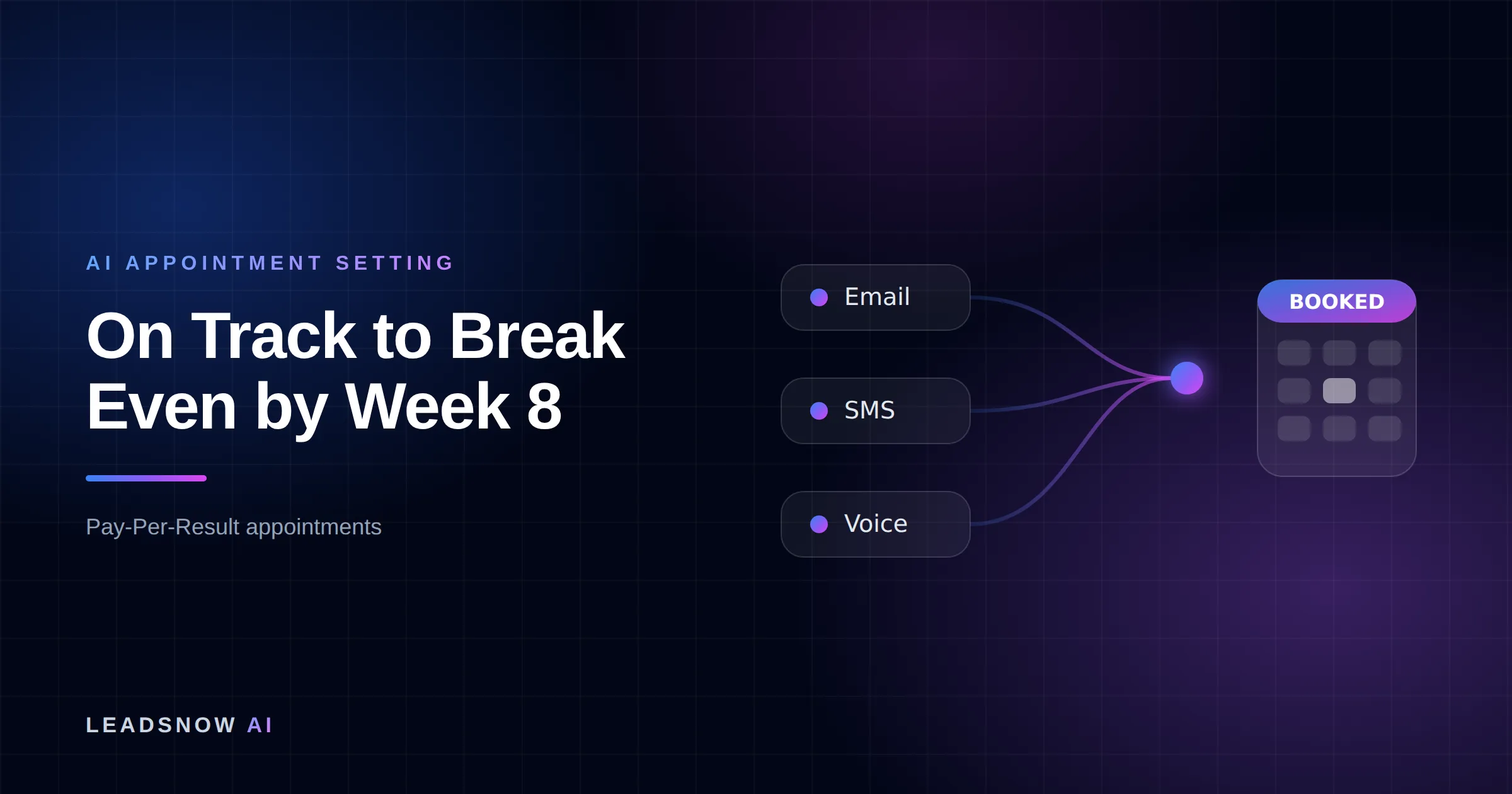
At a glance: Julian Barucca is director and head trainer at Battleground, a premium group-training and semi-private gym. Seven and a half weeks after opening, he was about five members away from breaking even — and expecting to get there by the end of the following week, with the ads delivering a fair few leads. All figures on this page come straight from the filmed interview below.
The numbers, as stated in the filmed interview
| Metric | Result |
|---|---|
| Time open at filming | Seven and a half weeks — their first gym, “pretty fresh” |
| Distance from break-even | About five members away at week 7.5 |
| Expected break-even | “By the end of next week” — on track for roughly week 8 |
| Next milestone | Covering all overheads and paying themselves a wage “within the next month or so” |
| Lead flow | The ads were “getting us a fair few leads”, delivered organised in a spreadsheet |
| Business model | Premium group training and semi-private — set sessions, entry levels, challenges |
How it works
How an AI sales agent books your appointments
Six channels feed in
Outbound email, SMS, voice and social — plus inbound search and AI referrals from our own AI SEO and chat agents.
Your list or CRM
Outbound starts from data you already own — past enquiries, dormant customers, or a targeted prospect list.
Qualified against your rules
Budget, timing and fit are checked before anything reaches your team, using criteria you set.
Booked into your calendar
Only qualified prospects reach the booking step, so your closers spend their time selling.
MAKE MORE SALES.
Pay-Per-Result pricing — We scale sales HARD aligned to your interests, better than anyone else.
Watch Julian tell it himself
A note on the era: this campaign was delivered by the LeadsNow team under its fitness brand, More Gym Members, and the video was filmed in early 2020. It predates the AI sales agents LeadsNow runs today — what you see here is the team’s earlier high-ticket fitness work: lead generation and the sales systems to handle it, exactly as described on camera.
Want this done for you? We book qualified sales appointments on a Pay-Per-Result basis — you only pay for calls that actually land in your calendar.
Starting from zero: a brand-new gym
Most case studies start with an established business. This one doesn’t. When the interview was filmed, Battleground was seven and a half weeks old — Julian’s first gym, in his words “pretty fresh”. And it wasn’t chasing the cheap end of the market: Battleground runs set sessions morning and afternoon, with different entry levels depending on your fitness level, plus challenges — a premium group-training and semi-private model rather than a race to the lowest price.
Overheads in a gym, as Julian puts it on camera, “are a fair bit” — so covering them from a standing start is, in his words, “a bit of a mission”. That’s the context for the number that follows.
Week 7.5: five members from break-even
Asked how close the gym was to breaking even, Julian’s answer was specific:
“Very close. We’re probably only a few members away, probably about five or so members, so we’re hoping by the end of next week — obviously the ads you’re running right now are getting us a fair few leads, so if we can close a few of them, hopefully by the end of next week we’ll be breaking even.”
— Julian Barucca, Battleground
To be precise about it: at filming, Battleground had not yet broken even — it was about five members away at week 7.5, and on track to get there by roughly week 8. As Riley points out in the interview, a lot of businesses are 12 months in and still not breaking even. The next milestone Julian names on camera: cover all the overheads and start paying themselves a wage “within the next month or so” — “then we’re kicking goals”.
Julian’s approved summary of the engagement:
“Within 8 weeks of opening our first gym, we’ve gone from ZERO to BREAKING EVEN.”
— Julian Barucca, Battleground (approved client quote)
If we can’t make you money, we don’t deserve yours.
Pay-Per-Result pricing — performance-based alignment.
“A lot more than I expected”
What surprised Julian wasn’t the lead flow — it was everything around it. He’d assumed the team would simply run the ads and generate the leads. The leads did arrive, organised in a spreadsheet — “everything’s really freaking easy, you just kind of simplify everything” — but the engagement went further than that.
“You kind of give us a lot more. So as far as business advice, how to run things, doing this, coming in, meeting up with us, having chats, phone calls, just the content you give us — yeah, you’ve provided a lot of value for kind of, I guess, the money we’re paying.”
— Julian Barucca, Battleground
The honest bit: it was still hard
This page would be dishonest if it pretended a gym launch is easy with the right marketing. Julian doesn’t pretend on camera either. Asked whether it had been tough, he says yes — definitely tough. He’d never felt like giving up, but there were days he reflected and hadn’t got where he wanted to be, running sleep-deprived because a gym is “a bit of a hard business to get into”. His coping mechanism: shifting focus back to why he started — and power naps of one or two hours in the middle of the day. Lead flow shortens the runway; it doesn’t remove the work.
His advice: it comes down to you
Julian’s message to anyone watching the video and thinking about reaching out was blunt about where the responsibility sits:
“If you actually want your business to grow, and if you’re going to listen to the advice that the boys give you, then sign up straight away. At the end of the day, it does come down to you — they can do all the work they want to, but if you’re going to give up, there’s no point to get started in the beginning. But if you want to see your business grow, and you’re actually going to implement what they’re teaching you, then 100% I would highly recommend it, because we’ve just been kind of blown out of the water as far as what we’ve received.”
— Julian Barucca, Battleground
Frequently asked questions
Did Battleground actually break even in 8 weeks?
At filming — seven and a half weeks after opening — Battleground was about five members away from break-even, and Julian expected to close the gap “by the end of next week” off the back of the leads coming in. So the accurate claim is: on track to break even by roughly week 8, from a standing start, on a premium group-training model. The comparison raised in the interview itself is that a lot of businesses are 12 months in and still not breaking even. We’d rather state it precisely than round it up.
Why does lead flow matter so much for a brand-new gym?
Because the market of people who should be members is enormous, but they don’t walk in by themselves. The World Health Organization’s physical activity fact sheet reports that 31% of the world’s adult population — 1.8 billion adults — are physically inactive, against a recommendation of at least 150 minutes of moderate-intensity activity per week. A new gym’s overheads start on day one; consistent paid lead flow is what compresses the gap between opening the doors and covering those overheads. For what lead costs look like in this vertical, see our Australian gym cost-per-lead benchmarks.
What did the engagement actually include?
As described in the filmed interview: running the ads and generating the leads, delivered organised in a spreadsheet — plus, beyond what Julian expected, business advice on how to run things, in-person meet-ups, chats and phone calls, and content. This was the team’s pre-AI era, operating as More Gym Members; LeadsNow’s AI sales agents came later. Julian’s own caveat applies: results depend on the owner implementing what they’re taught.
Want to see how other clients have gone? See all client stories — including another 8-week gym story, F45 Narrabeen’s 57 members in 8 weeks.
Pay-Per-Result appointments
See if we’re a fit
We book qualified sales appointments for you and you pay on results, not retainers. Our booking page asks a few quick questions so you find out in two minutes whether that model suits your business.
- 50,769+ appointments booked without cold calling.
- Pay-Per-Result pricing — you pay for booked, qualified calls.
- Pick your own time on our live calendar, no phone tag.