
Performance-based lead generation works best for B2B companies with deal sizes and sales processes strong enough to absorb per-lead or per-appointment costs while still turning a profit. The model, where you pay only for a qualified lead, meeting, or booked appointment, transfers risk from your budget to the vendor’s execution. The catch: it only holds up when the contract has a machine-checkable spec, a defined dispute window, and clear data ownership. Skip those three, and quality erodes fast.
TL;DR:
- Performance-based lead generation is most effective for companies with large deal sizes and predictable sales processes that can absorb per-result costs.
- Clear, machine-checkable specifications, a defined dispute window, and data ownership clauses are essential for maintaining lead quality and resolving disputes.
- The cost per lead can vary from $15 to $300, with higher prices linked to exclusivity and deeper qualification, affecting overall cost-effectiveness.
- Fully loaded costs per closed deal depend heavily on lead-to-opportunity and opportunity-to-close conversion rates, which should be benchmarked with your own data.
- Building an in-house lead engine becomes more economical when volume is high enough to justify fixed team costs and when owning detailed performance data outweighs outsourcing benefits.
Table of Contents
- What Is Performance-Based Lead Generation?
- Why Performance-Based Lead Generation Took Over in 2026
- What Are the Main Pricing Models?
- How Does the Performance-Based Model Actually Work?
- Which Channels Do Vendors Use, and Does It Matter?
- How Do You Calculate the True Cost Per Lead?
- What Benefits Come From Performance-Based Lead Generation?
- What Are the Biggest Risks in Pay-for-Performance Lead Generation?
- What Verification Standards Should You Require?
- How Do You Evaluate and Negotiate With a P4P Vendor?
- When Should You Build an In-House Lead Engine Instead?
- What Do Real Performance-Based Results Look Like?
- Is Performance-Based Lead Generation Right for Your Sales Team?
- Want a Pay-Per-Result Partner Instead of Building This In-House?
- Sources
- FAQ
How it works
How an AI sales agent books your appointments
Your list or CRM
We start from data you already own — past enquiries, dormant customers, or a targeted prospect list.
The agent makes contact
Email, SMS and voice, with follow-up that persists for weeks instead of stopping after two attempts.
Qualified against your rules
Budget, timing and fit are checked before anything reaches your team, using criteria you set.
Booked into your calendar
Only qualified prospects reach the booking step, so your closers spend their time selling.
MAKE MORE SALES.
Pay-Per-Result pricing — We scale sales HARD aligned to your interests, better than anyone else.
What Is Performance-Based Lead Generation?
Performance-based lead generation, often called pay-for-performance or P4P, is a pricing structure where you pay a vendor only when they deliver a result that meets an agreed definition, not for hours worked or ads run. That result can be a raw lead, a marketing-qualified lead (MQL), a sales-qualified lead sometimes labeled CPQL, a booked meeting, or in revenue-share arrangements, a slice of closed revenue.
Payment triggers when the delivered lead or appointment passes a validation check against your spec, things like a working phone number, confirmed budget range, or a verified calendar booking that shows up on your CRM. No match, no invoice.
Lead generation remains the top content marketing priority for a large share of B2B teams, and pay-per-lead pricing appeals precisely because it aligns vendor incentives with your outcome instead of paying for effort regardless of result.
By 2026, AI-driven verification tools have made this model far more granular. Vendors can score, deduplicate, and validate leads in near real time, which means:
- Contract terms can specify exact acceptance criteria instead of vague “qualified lead” language.
- Disputes get resolved with data (call recordings, timestamps, CRM logs) instead of arguments.
- Pricing can flex by lead depth, from a bare contact record to a fully qualified, calendar-booked appointment.
Want this done for you? We book qualified sales appointments on a Pay-Per-Result basis — you only pay for calls that actually land in your calendar.
Why Performance-Based Lead Generation Took Over in 2026
Marketing budgets tightened while sales cycles stayed unpredictable, and that combination pushed a lot of B2B leaders toward pay-for-result models. Three forces are driving the shift:
- Risk transfer. You stop paying for impressions, clicks, or “brand awareness” that never turns into pipeline.
- Faster test cycles. AI-enabled attribution and scoring let vendors verify quality in days, not months, so you can test a channel and scale or kill it quickly.
- Better fit for sales-ready teams. Companies with a functioning sales process win the most. If your reps can’t convert a qualified meeting into a deal, no pricing model fixes that.
AI and data-driven attribution are two of the performance marketing trends reshaping 2026 budgets, and outcome-based pricing is the direct byproduct. Buyers who once tolerated retainer-based agencies with soft deliverables are now asking a blunter question: why pay before you get a result?
What Are the Main Pricing Models?
Performance-based lead generation isn’t one model, it’s a family of them, and each shifts risk and cost differently. Cost per lead (CPL) is the loosest, often just a contact record matching basic firmographic criteria. Cost per qualified lead (CPQL or MQL-based pricing) adds a qualification layer, budget confirmed, need identified, decision timeline established. Per-meeting or pay-per-appointment pricing goes further still, charging only when a sales-ready call lands on the calendar. Revenue share ties the vendor’s payment to a percentage of closed deal value, which pushes the most risk onto the vendor but usually comes with a longer payback window for them.
| Model | What triggers payment | Typical price driver | Best fit |
|---|---|---|---|
| Cost per lead (CPL) | Contact matches basic criteria | Volume, list exclusivity | High-volume, lower deal-value products |
| Cost per qualified lead (CPQL) | Lead passes qualification criteria (budget, need, timeline) | Qualification depth, vertical | Mid-market B2B with defined ICP |
| Per meeting / pay-per-appointment | Meeting booked and shows on calendar | Show-up guarantees, exclusivity | High-ticket coaching, consulting, complex B2B sales |
| Revenue share | Percentage of closed deal value | Deal size, sales cycle length | Long sales cycles, high-value contracts |
| Hybrid (base + performance) | Small retainer plus bonus per result | Balance of vendor risk tolerance | Enterprise accounts wanting stability and alignment |
Pay-per-lead pricing swings widely, current guides put the range between $15 and $300 per lead depending on vertical, exclusivity, and how deep the qualification goes. Exclusive, high-intent leads in a niche B2B category sit at the top of that range. Shared, low-qualification leads sit at the bottom. The trade-off is constant: higher volume tends to mean thinner qualification, and tighter qualification tends to mean fewer, pricier leads.
If we can’t make you money, we don’t deserve yours.
Pay-Per-Result pricing — performance-based alignment.
How Does the Performance-Based Model Actually Work?
The mechanics matter more than the label. A pay-for-performance arrangement runs on a repeatable operational loop, and where that loop breaks is usually where disputes start.
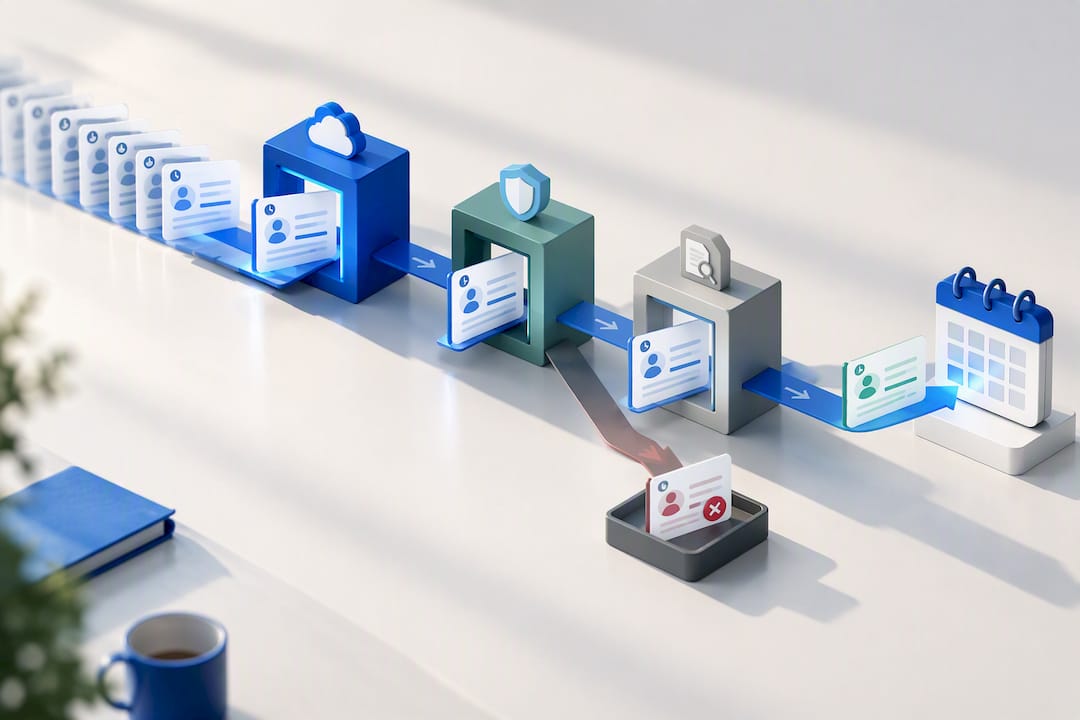
- Spec creation. You and the vendor agree on a machine-checkable definition of a valid lead, specific fields (company size, title, budget range, intent signal), not adjectives like “high quality.”
- Capture. The vendor sources contacts through ads, outbound, content syndication, or partner networks.
- Qualification. Leads get filtered against the spec, often through a mix of AI scoring and human review.
- Verification. Contact details, phone numbers, and stated intent get checked before delivery, sometimes with call recordings attached as evidence.
- Delivery and routing. Verified leads flow into your CRM through an API or webhook, ideally in real time.
- Validation window. You have a defined period, often 24 to 72 hours, to reject a lead that fails the agreed spec.
A properly built contract needs a machine-checkable spec, a rejection window, and a data-ownership clause written in before you sign anything, not negotiated after a dispute.
Pro Tip: Ask the vendor for their API delivery logs before the pilot even starts. If they can’t show you timestamped delivery records from a previous client, they likely can’t provide the evidence you’ll need to dispute a bad lead later.
Which Channels Do Vendors Use, and Does It Matter?
The channel behind a lead affects both its price and how easy it is to verify. Paid search and social ads scale fast but produce leads that need heavy qualification since intent varies widely. Content syndication (gated whitepapers, webinar sign-ups) tends to generate higher volume at lower per-unit cost, but freshness decays quickly, a syndicated lead from three weeks ago converts far worse than one from three hours ago. Outbound (cold email, cold calling, AI-driven SDR outreach) produces smaller volume but tighter targeting, since the vendor is choosing accounts rather than waiting for inbound interest. Partner and affiliate networks can deliver exclusivity but make verification harder, since you’re relying on a third party’s sourcing standards.
Speed matters as much as the channel itself. Leads contacted within five minutes of capture convert at dramatically higher rates than leads contacted after even a short delay, which is why real-time API delivery beats batched CSV drops in almost every scenario.
- Ads and paid social: fast scale, lower verifiability, needs heavy qualification.
- Content syndication: high volume, fast decay, cheaper per unit.
- Outbound/AI-driven SDR: lower volume, tighter targeting, higher verifiability.
- Partner/affiliate networks: exclusivity possible, harder to audit sourcing.
How Do You Calculate the True Cost Per Lead?
The sticker price per lead or per meeting tells you almost nothing on its own. What matters is fully loaded cost per closed deal, the total spend divided by actual deals won, not leads delivered.
The formula looks like this: Fully loaded cost per closed deal = Total vendor spend ÷ Number of closed deals. To get there, you need two intermediate rates: lead-to-opportunity (what percentage of delivered leads become real sales opportunities) and opportunity-to-close (what percentage of those opportunities turn into signed deals). Conversion benchmarks vary widely by channel and industry, so use your own historical numbers whenever you have them, and lean on general conversion-rate benchmarks only as a sanity check for a brand-new vendor relationship.
Here’s a simplified break-even example using realistic 2026 ranges:
| Metric | Example value |
|---|---|
| Cost per qualified lead | $2,400 |
| Lead-to-opportunity rate | 10 to 15% |
| Opportunity-to-close rate | 20% |
| Leads needed per closed deal | 20 |
| Fully loaded cost per closed deal | $2,400 |
If your average deal value is under roughly $2,400, this vendor relationship loses money before you factor in sales team time. That single number, cost per closed deal against average deal value, is the only metric that tells you whether a performance-based arrangement is actually working. Everything else, cost per lead, response rate, meeting show-rate, is a leading indicator, not the verdict.
What Benefits Come From Performance-Based Lead Generation?
Done right, this model changes more than your invoice. It changes cash flow timing and accountability structure across the whole sales pipeline.
- Cash-flow alignment. You spend money after revenue-relevant activity happens, not months before, which frees up budget for teams that can’t commit to large upfront retainers.
- Built-in accountability. A vendor who only gets paid on results has no incentive to pad a monthly report with vanity metrics.
- Faster optimization cycles. Since every lead is tied to a payment event, underperforming channels get identified and cut quickly instead of riding out a 12-month contract.
- Scalability without headcount. You can flex volume up or down based on sales capacity without hiring or firing an internal SDR team.
What Are the Biggest Risks in Pay-for-Performance Lead Generation?
The model’s biggest strength, aligned incentives, becomes its biggest weakness the moment the spec is loose. A vague definition of “qualified” invites vendors to hit volume targets with marginal leads that technically pass but never convert.
- Spec ambiguity. Without measurable fields (title, budget, timeline, verified contact), vendors optimize for quantity over fit.
- No data ownership. If lead records, call recordings, and CRM history stay with the vendor, switching providers means losing your history and starting from zero.
- Vendor lock-in. Some contracts quietly make it hard to export historical lead data, which locks you into renewal even after quality drops.
- Compliance exposure. Outbound scripts and data-handling practices that don’t meet regional privacy rules can create brand and legal risk that lands on you, not the vendor.
What Verification Standards Should You Require?
Lead quality control isn’t a nice-to-have add-on, it’s the entire mechanism that makes performance-based pricing trustworthy. Build the standard into the contract before the first lead ever arrives.
- Write a machine-checkable spec. Every field, job title match, company size range, intent signal, phone verification status, needs a pass/fail test, not a subjective description.
- Set a rejection threshold. A common structure allows rejecting up to a defined percentage of a batch (many buyers negotiate somewhere around 10 to 15%) without triggering a broader contract review.
- Define a dispute window. Give yourself 24 to 72 hours after delivery to flag a bad lead, and get that window in writing.
- Require verification tooling. Insist on email verification, phone validation, and duplicate detection run before delivery, not after you complain.
- Demand raw evidence. Ask for CSV exports, call recordings, and timestamped delivery logs alongside every batch so a dispute has something concrete behind it.
Pro Tip: Hand the vendor a pre-verified target account list from your own CRM before the pilot starts. It lowers their sourcing cost, and that savings usually translates into a better per-lead rate for you, since you’re removing the hardest part of their job.
Lead nurturing quality matters just as much as acquisition quality. A structured nurture process after delivery often determines whether a technically valid lead actually converts, so don’t treat vendor verification as the finish line.
How Do You Evaluate and Negotiate With a P4P Vendor?
Treat vendor selection like a sales cycle of your own. Ask hard questions before you sign anything, run a small pilot before you commit to volume, and put every quality standard in writing.
Discovery questions to ask every vendor:
- What channels source these leads, and can you show sample data from a similar client?
- Is this lead exclusive to us, or shared across multiple buyers?
- What’s your delivery latency from capture to our CRM?
- What percentage of delivered leads typically get rejected by your other clients?
Contract clauses to insist on:
- Data ownership: all lead records, call recordings, and prospect data belong to you, not the vendor, even after termination.
- Replacement policy: rejected leads get replaced at no cost within the dispute window.
- Rejection caps: a defined percentage of a batch can be rejected without penalty to either side.
- Pilot terms: a fixed volume and time window (commonly 30 to 60 days) before any long-term commitment.
| Negotiation point | Why it matters |
|---|---|
| Data ownership clause | Prevents vendor lock-in and preserves your CRM history |
| Rejection window | Gives you time to validate before payment is final |
| Exclusivity terms | Determines if competitors get the same leads |
| Pilot measurement period | Lets you judge real conversion before scaling spend |
Run the pilot with a small, defined budget and measure against your own lead-to-opportunity and opportunity-to-close rates, not the vendor’s promised averages. Hybrid contracts, a small base retainer plus a per-result bonus, tend to reduce the incentive for vendors to game volume at the expense of quality, and they’re worth proposing if a pure per-lead structure feels too risky for either side.
When Should You Build an In-House Lead Engine Instead?
Performance-based vendors are usually the right starting point, but they’re not permanent for every company. In-house lead generation starts to make more financial sense once your volume is high and consistent enough that the marginal cost of an internal team drops below what you’re paying per lead, and once your own data (which channels convert, which messaging works) becomes valuable enough that you don’t want it living in a vendor’s system.
- Long-term, high-volume needs often favor building in-house once volume justifies the fixed cost of a team.
- Hybrid pricing, a small base retainer plus per-result bonuses, works well as a bridge between full outsourcing and full in-house control.
- Use the vendor relationship strategically: require full data exports during any pilot so you can study what worked and fold it into your own playbook later, instead of starting from zero if you eventually bring the function internal.
What Do Real Performance-Based Results Look Like?
Numbers matter more than promises in this model, since the entire pitch is “we don’t get paid unless it works.” Leadsnow’s own operational history offers a useful reference point for what performance-based delivery looks like when the spec, verification, and routing actually function as designed.
A leading AI-based lead generation vendor reports over 50,000 AI-booked appointments delivered under a pay-per-result structure, along with client outcomes described as a multiple sales lift when an AI-driven qualification and follow-up system replaced weaker manual processes.
The practical lesson isn’t the specific numbers, it’s what they represent: a vendor whose entire business model depends on appointments actually showing up qualified on a calendar has a structural reason to keep verification tight. That’s the theory behind performance-based pricing in general. Whether any individual vendor lives up to it is exactly what your pilot period should test, with the acceptance criteria and dispute window you negotiated up front doing the actual verification work.
Is Performance-Based Lead Generation Right for Your Sales Team?
The model rewards businesses that already know their numbers. If you can’t say what your average deal size is or how often a qualified meeting turns into revenue, fix that first, because no pricing structure compensates for not knowing your own conversion math.
The biggest misconception floating around this space is that performance-based pricing eliminates risk. It doesn’t. It relocates risk from your marketing budget to your contract’s fine print. A loose spec with no rejection window carries just as much downside as an upfront retainer with a lazy vendor, it just shows up as wasted sales-team hours instead of wasted ad spend. Start small, demand raw data access, and treat the pilot period as due diligence, not a formality.
— Riley
Want a Pay-Per-Result Partner Instead of Building This In-House?
Some pay-per-result lead generation agencies charge clients only when a qualified appointment lands on the calendar, with no retainer or flat monthly fee, avoiding payment for unverifiable effort. That’s the same structural discipline this entire guide argues for: a per-result fee structure (typically 1 to 5%) or revenue-share arrangement (10 to 20%) that puts the vendor’s payday behind your outcome, not in front of it.
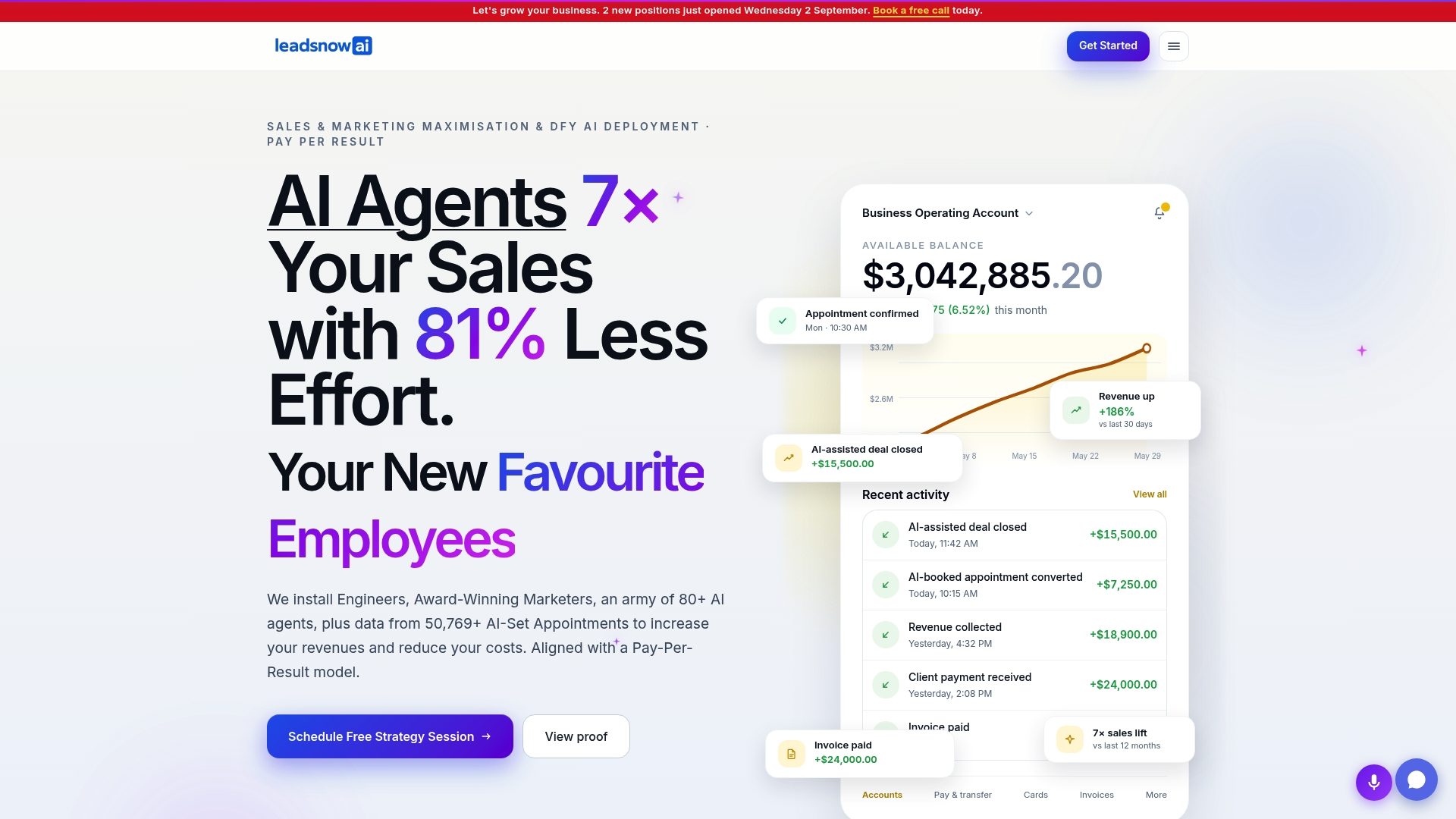
Leadsnow combines AI sales agents with continuous data analytics to handle outbound, qualification, and follow-up, then routes booked, qualified appointments straight to your calendar. The service fits business owners, high-ticket coaches, gym operators, consultants, and startups who want AI-driven appointment setting without managing an internal SDR team or negotiating a vague retainer. Fitness and coaching businesses specifically can review lead generation planning frameworks built from Leadsnow’s own client work in that vertical.
If your average deal size and close rate can support a per-result fee, and you want a provider whose payment depends entirely on your calendar filling up, book a discovery call and ask a suitable lead generation agency to walk through pilot terms for your specific sales process.
Sources
- 9 performance marketing trends to watch in 2025 — Forbes
- What is a good conversion rate? — WordStream
- What is Pay Per Lead? The Definitive Guide for Agencies — Lead Distro AI
- Pay for Performance Lead Generation Explainer — Tomba blog
FAQ
What Are the Different Types of Lead Generation?
Lead generation broadly splits into inbound (content, SEO, organic social) and outbound (cold outreach, paid ads, partner networks), and within performance-based models specifically, the main types are pay-per-lead, cost-per-qualified-lead, pay-per-appointment, and revenue share. Each shifts different amounts of risk and qualification responsibility onto the vendor.
What Are Some Examples of Performance-Based Marketing?
Common examples include pay-per-lead advertising, affiliate marketing paid on conversion, cost-per-acquisition campaigns, and pay-per-appointment lead generation like the model Leadsnow uses, where payment triggers only when a qualified appointment is booked. Revenue-share arrangements, where a vendor earns a percentage of closed deal value, are another form seen in longer B2B sales cycles.
How Much Should You Pay for Lead Generation?
Pay-per-lead pricing typically ranges from $15 to $300 per lead depending on vertical, exclusivity, and qualification depth, while pay-per-appointment and revenue-share models price differently based on deal size and sales cycle length. Leadsnow structures pricing as a per-result fee of 1 to 5% or a revenue share of 10 to 20%, with an available scope-based setup fee, rather than a flat per-lead rate.
How Much Is the Salary of a Lead Generation Specialist?
Salary figures for in-house lead generation specialists vary widely by region, seniority, and industry, and no single reliable figure applies globally. Many companies use this variability as one reason to compare an internal hire’s fully loaded cost against a performance-based vendor’s per-result pricing before deciding whether to build the function in-house.
Recommended
- Cost Per Booked Discovery Meeting for B2B Consultants: 2026 Australian Benchmarks
- Cost Per Broker Meeting in Australia: 2026 Benchmarks
- How to Price B2B SaaS Deals: A Framework Based on 1,425+ Booked Demos
- Best Lead Generation & Demo-Booking Agencies for B2B SaaS in Australia (2026)
Pay-Per-Result appointments
See if we’re a fit
We book qualified sales appointments for you and you pay on results, not retainers. Our booking page asks a few quick questions so you find out in two minutes whether that model suits your business.
- 50,769+ appointments booked without cold calling.
- Pay-Per-Result pricing — you pay for booked, qualified calls.
- Pick your own time on our live calendar, no phone tag.