
Inbound leads come from buyers who found you already searching; outbound leads come from buyers you reached before they knew they were looking. Use outbound when you need pipeline this quarter. Invest in inbound when you want a cost-per-lead that keeps falling as your content library grows. Most B2B teams that win at scale eventually run both against the same target account list, letting each motion feed signals to the other.
TL;DR:
- Inbound leads grow more cost-effectively over time as your content library expands, with organic inbound taking 60 to 180 days to generate pipeline.
- Outbound leads provide faster pipeline, often within days or weeks, but require significant infrastructure, targeted lists, and disciplined execution.
- Cold outbound campaigns have much lower close rates and higher costs compared to inbound, but are essential for high-ACV, narrow markets or urgent pipeline needs.
- Successful hybrid strategies rely on trigger-based outreach, intent data, and multi-threaded sequencing rather than volume-focused campaigns.
- AI-driven appointment setting services can automate and accelerate outbound and inbound integration, often on a pay-per-result basis, ideal for businesses needing immediate results.
Table of Contents
- What Are Inbound Leads? Channels and Timelines
- What Are Outbound Leads? Targeting and Operational Needs
- Inbound Vs Outbound Leads: A Side-by-Side Comparison
- Pros and Cons of Inbound and Outbound Lead Generation
- How to Choose Between Inbound and Outbound Leads
- How to Run a Hybrid Inbound and Outbound Playbook
- Metrics and Timelines That Actually Matter
- Why the “Pick One” Debate Misses the Point
- Get Both Motions Running Without Building an SDR Team From Scratch
- Sources
- FAQ
How it works
How an AI sales agent books your appointments
Your list or CRM
We start from data you already own — past enquiries, dormant customers, or a targeted prospect list.
The agent makes contact
Email, SMS and voice, with follow-up that persists for weeks instead of stopping after two attempts.
Qualified against your rules
Budget, timing and fit are checked before anything reaches your team, using criteria you set.
Booked into your calendar
Only qualified prospects reach the booking step, so your closers spend their time selling.
MAKE MORE SALES.
Pay-Per-Result pricing — We scale sales HARD aligned to your interests, better than anyone else.
What Are Inbound Leads? Channels and Timelines
Inbound lead generation means the buyer initiates contact. They found you through a search result, a piece of content, a referral, or an ad, and they raised their hand before a rep ever reached out. Industry guides frame this as demand capture: you are not creating interest, you are catching interest that already exists in Indeed’s breakdown of inbound versus outbound leads.
The common capture points look like this:
- Gated content downloads (guides, templates, benchmark reports)
- Demo requests and free trial signups
- Newsletter subscriptions and webinar registrations
- Organic search landing on a pricing or comparison page
- Referrals from existing customers or partners
Timing depends heavily on the channel. Organic inbound, built on SEO and answer-engine optimization, usually takes 60 to 180 days to build meaningful pipeline, according to Abmatic. Paid inbound, meaning search ads against commercial intent keywords, can produce leads within days because you’re renting visibility instead of earning it, a distinction Salesforce’s inbound versus outbound sales analysis lays out clearly. That speed comes at a cost per click that never drops the way organic traffic eventually does.
Want this done for you? We book qualified sales appointments on a Pay-Per-Result basis — you only pay for calls that actually land in your calendar.
What Are Outbound Leads? Targeting and Operational Needs
Outbound lead strategies flip the sequence. You identify a target account, figure out who the decision maker is, and reach them before they’ve searched for anything. Cold email, SDR calling, LinkedIn outreach, ABM display ads, and direct mail all fall under this umbrella. Nobody asked to hear from you, which is exactly the point when your product solves a problem the buyer hasn’t named yet.
Not all outbound performs the same. Spray-and-pray lists, where a rep blasts the same message to thousands of unqualified contacts, produce the reply rates everyone complains about. Triggered outbound, meaning outreach tied to a signal such as a new funding round, a leadership hire, or a spike in product research, converts at reply and meeting rates that are reportedly several times higher than untargeted campaigns. The difference is precision, not volume.
Running outbound well requires infrastructure most teams underestimate at first:
- A verified, segmented contact list tied to real buying signals
- Deliverability hygiene: warmed domains, SPF/DKIM/DMARC records, sending limits
- A sequencing tool to manage multi-touch cadences across email, phone, and social
- Dedicated SDR capacity, since manual personalization at scale doesn’t run itself
Skip any of these and outbound becomes the thing that gives cold outreach its reputation.
Inbound Vs Outbound Leads: A Side-by-Side Comparison
The buyer-state distinction drives everything else on this list. Inbound buyers arrive with context and intent already built; outbound buyers need that context built for them in the first conversation. That single difference explains most of the gap in the numbers below.
| Factor | Inbound | Outbound |
|---|---|---|
| Buyer state | Self-initiated, already searching | Prospect-initiated by you, no prior intent |
| Primary channels | SEO, content, AEO, organic social, referrals | Cold email, SDR calls, ABM ads, LinkedIn, direct mail |
| Time to first lead | Days (paid) to 60–180 days (organic) | Days to a few weeks |
| Cost shape | High upfront, then compounds down | Lower upfront, cost per lead stays flatter |
| Lead quality/close rate | Higher average close rate | Lower average close rate on cold outreach |
| Scalability | Scales well across broad TAM | Limited by SDR headcount and list quality |
| Best-fit segment | Large TAM, product-led motion | Small TAM, high ACV, enterprise accounts |
Close rates tell the sharpest part of this story. Published averages put inbound close rates around 14.6%, compared to roughly 1.7% for cold outbound, according to SalesEcho’s 2026 outbound lead generation guide. Cost follows a similar pattern in reverse: inbound methods run about 62% cheaper per lead over time, per Landbase’s analysis of outbound versus inbound go-to-market economics, though that figure assumes you’ve already absorbed the upfront cost of building the content or SEO asset generating those leads.
None of that makes outbound the weaker choice by default. A company selling a $150,000 enterprise contract to 300 named accounts can’t wait for organic search to find them. A company selling a $50-a-month tool to a market of 500,000 businesses can’t afford to cold call its way to scale. The right mix depends on your average contract value and how many accounts actually fit your ideal customer profile.
If we can’t make you money, we don’t deserve yours.
Pay-Per-Result pricing — performance-based alignment.
Pros and Cons of Inbound and Outbound Lead Generation
Inbound advantages and risks:
- Content and SEO assets compound. A blog post ranking on page one keeps generating leads long after you stop paying for it.
- Marginal cost per lead drops as your library grows, unlike paid channels that cost the same on lead 1,000 as lead one.
- Strong inbound presence builds brand trust that shortens sales cycles even on deals that started elsewhere.
- The downside: ramp time is slow, and it demands sustained content operations, not a one-time sprint.
Outbound advantages and risks:
- Speed. You can have meetings booked within a week of building a target list.
- Precision on named accounts, particularly useful for high-ACV enterprise deals where the buyer will never search a generic term.
- The downside: cost per lead runs higher, deliverability mistakes damage domain reputation, and clumsy execution creates real brand risk.
Runway matters more than either list. A startup burning cash needs outbound’s speed even if the per-lead cost stings. A company with 18 months of runway and an existing SDR team can afford to let inbound compound.
How to Choose Between Inbound and Outbound Leads
Run through this checklist before allocating next quarter’s budget:
- Average contract value (ACV): Deals under a few thousand dollars rarely justify manual SDR outreach. Deals over $20,000 usually do.
- Total addressable market (TAM): A narrow list of 500 possible buyers favors outbound precision; a market of 50,000 favors inbound scale.
- Runway and time-to-revenue pressure: If the board wants pipeline this quarter, outbound wins the argument regardless of long-term economics.
- Existing brand or search presence: If you already rank for commercial terms, doubling inbound spend costs less than building outbound from zero.
- SDR capacity: Outbound without dedicated staffing turns into an occasional side project that never gets the volume needed to work.
As a rough allocation guide: pre product-market-fit companies should lean outbound heavy to get direct market feedback fast. Companies in the $5 million to $20 million ARR range typically do best running a genuine hybrid. Companies past $20 million ARR often shift to inbound heavy, with outbound reserved for named strategic accounts. A practical framework for building a lead generation plan can help translate this checklist into an actual quarterly budget.
Pro Tip: Before adding outbound headcount, audit your existing inbound leads that went cold. Reactivating a dormant list is almost always cheaper than acquiring a new one.
How to Run a Hybrid Inbound and Outbound Playbook
The tactical version of “run both” starts with a defined target account list, not a general audience. Build a list of 250 to 2,500 accounts depending on your TAM size, then instrument visitor identification and intent data so you know when someone on that list engages with your content.
Follow these steps to connect the two motions:
- Build the target account list. Score accounts by firmographic fit, then rank by intent signals if you have access to a data provider.
- Deploy visitor ID and intent tracking. This turns anonymous website traffic into named-account signals your SDR team can act on.
- Map inbound assets to account segments. A guide aimed at gym owners shouldn’t be the same asset served to enterprise buyers.
- Configure triggers that create outbound touches. A pricing page visit, a second content download, or a spike in intent data should generate a task for a rep within hours, not days.
- Sequence and multi-thread. Don’t rely on one contact at the account. Reach the economic buyer, the technical evaluator, and the day-to-day user with tailored messages tied to the same trigger event.
- Assign clear ownership. Marketing owns the ABM platform and content mapping; SDRs own the sequencing tool and the actual outreach; both share the intent data feed.
This is where routing signals between motions earns its keep. Passive content consumption alone rarely closes a deal, but when that consumption triggers a timely outbound touch, the buyer feels understood rather than spammed, a point Abmatic.ai’s guide to combining inbound and outbound makes well. Common outbound failures come down to volume over precision, chasing more contacts instead of timing outreach to real events like a funding announcement or a new VP hire.
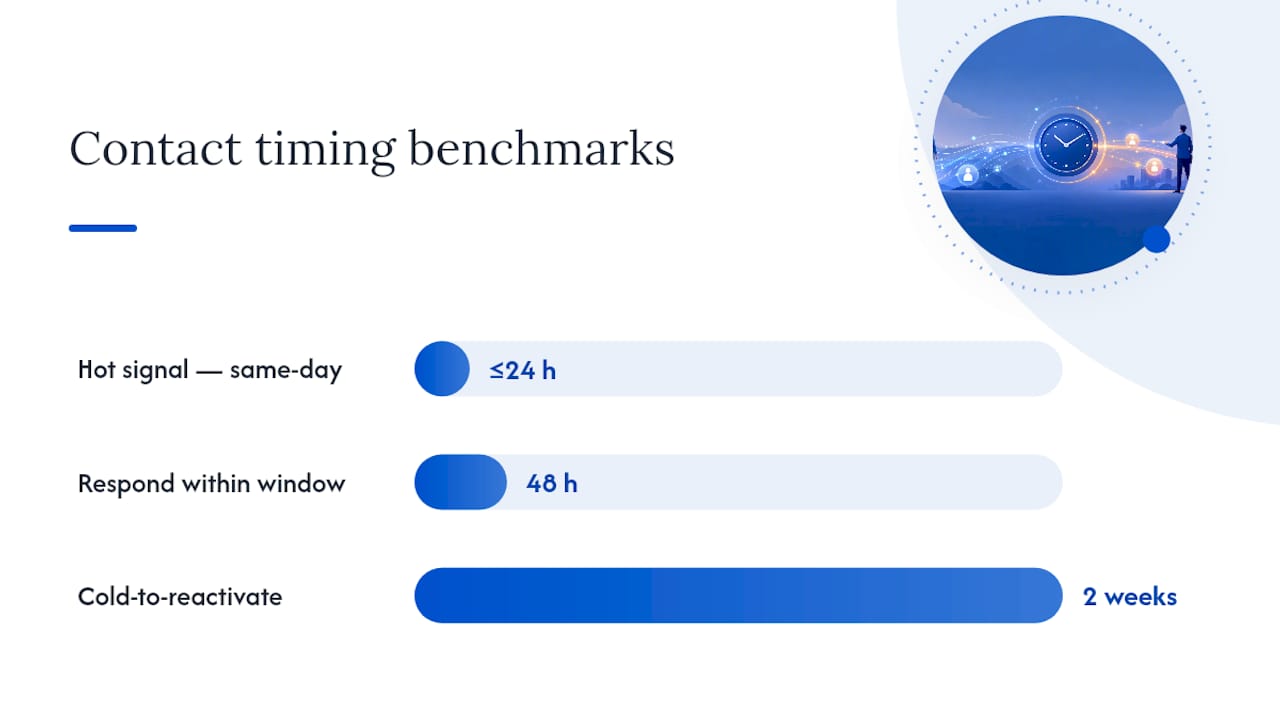
Pro Tip: If a lead downloads a bottom-funnel asset (pricing guide, ROI calculator) and visits your pricing page in the same week, treat that as a hot signal worth a same-day call, not a Tuesday follow-up.
For teams building this out, nurturing sequences that keep leads warm between touches matter as much as the initial trigger. A lead that goes cold for two weeks after downloading a guide is far harder to reactivate than one contacted within 48 hours.
Metrics and Timelines That Actually Matter
Track cost per lead (CPL), lead-to-meeting conversion, opportunity-to-close rate, time-to-first-lead, and CAC payback period across both motions separately before you try to compare them. Blending the numbers early hides which channel is actually underperforming.
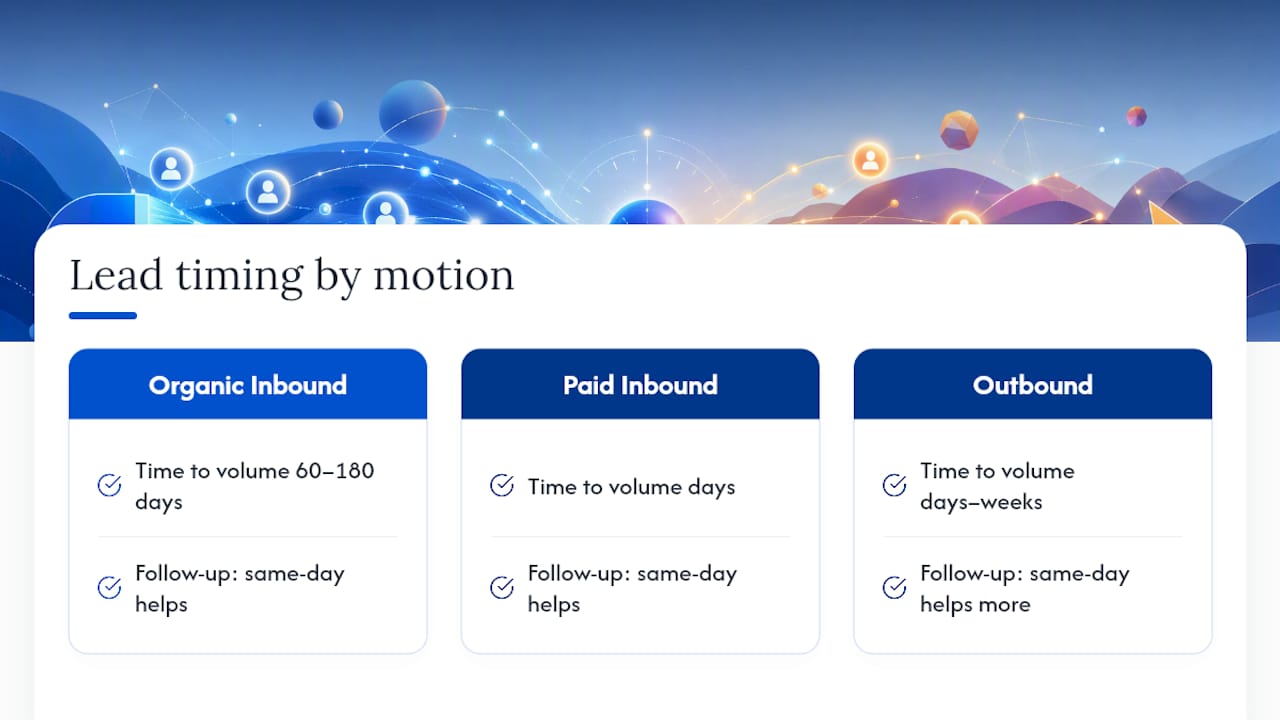
Realistic timelines: organic inbound needs 60 to 180 days before it produces consistent volume, paid inbound can generate leads within days, and outbound typically produces meetings within days to a few weeks of launching a campaign, based on the timing data compiled by Abmatic.ai. Fast follow-up compounds these numbers in either direction. Slow response to an inbound demo request lets that lead’s interest decay, while a same-day response to a triggered outbound signal often converts far better than a delayed one, according to Apollo’s 2026 inbound marketing framework.
The benchmark worth remembering: inbound close rates average around 14.6% against roughly 1.7% for cold outbound, per SalesEcho’s data. That gap should shape how you weight quota expectations for each motion, not just how you allocate budget.
For hybrid programs, use multi-touch attribution rather than last-touch or first-touch models. A deal that started with a blog post, sat dormant for a month, then closed after a triggered outbound call should get credit split across both channels, not awarded entirely to whichever one happened last.
Why the “Pick One” Debate Misses the Point
Most of the inbound versus outbound argument treats this like a permanent allegiance, as if choosing outbound means abandoning content forever. That framing wastes energy that should go into sequencing.
The real skill isn’t picking a side. It’s building the plumbing that lets a content download trigger a phone call, and lets a cold outreach reply feed back into your content strategy so you know what resonates with the accounts that matter. Teams that treat inbound and outbound as competing budgets almost always underperform teams that treat them as one motion with two entry points.
Pay-per-result models exist partly because this alignment problem is real. When an agency gets paid only for a booked, qualified appointment rather than a monthly retainer, the incentive to actually route signals between inbound and outbound stops being optional. AI-driven appointment setting can close the gap between a hot signal and a booked call far faster than a manual handoff between marketing and an SDR team ever could, which matters most in the exact window where interest is highest and decaying fastest.
— Riley
Get Both Motions Running Without Building an SDR Team From Scratch
Building the hybrid playbook above, target lists, signal routing, sequencing, SDR coverage, takes months most growing businesses don’t have. AI agents can handle outreach, qualification, and follow-up, with payment structures that charge only when a qualified appointment is booked rather than a fixed retainer.
That pay-per-result structure covers 1 to 5% per-result fees or a revenue share of 10 to 20%, depending on scope, with details on setup handled case by case. It is designed for business owners, coaches, gyms, and consultants who need booked appointments promptly rather than waiting through a long content ramp-up period. If your outbound follow-up is inconsistent or your inbound leads go cold before a rep reaches them, AI appointment setting closes that gap automatically. Check current AI lead generation services to see whether your volume and ACV fit the model, and get a scope-based quote before committing budget elsewhere.
Sources
- Inbound vs. Outbound Leads: What’s the Difference? | Indeed
- Outbound Lead Generation: Complete B2B Guide (2026) | SalesEcho
- Outbound vs Inbound in 2026: The Data Behind GTM Strategy Choices | Landbase
FAQ
What’s the main difference between inbound and outbound leads?
Inbound leads come from buyers who found you through search, content, or referral. Outbound leads come from prospects your team contacted first, before they showed any intent, a distinction outlined in Indeed’s comparison of the two lead types.
Which converts better, inbound or outbound leads?
Inbound leads convert at a noticeably higher rate on average, roughly 14.6% versus 1.7% for cold outbound, according to SalesEcho’s benchmark data. Triggered, signal-based outbound closes much of that gap compared to untargeted cold outreach.
How long does it take to see results from inbound versus outbound?
Organic inbound usually needs 60 to 180 days to build steady volume, while paid inbound can generate leads within days. Outbound campaigns typically produce meetings within days to a few weeks, based on Abmatic.ai’s timing analysis.
Should a small business focus on inbound or outbound leads first?
It depends on runway and target market size: businesses needing pipeline immediately should lean on outbound, while those with time to invest and a broad addressable market benefit more from inbound’s compounding cost curve. Many growing businesses run both at once with the help of a pay-per-result appointment-setting service rather than building SDR capacity from scratch.
How much does Leadsnow charge for lead generation services?
Leadsnow charges on a pay-per-result basis, either a 1 to 5% per-result fee or a 10 to 20% revenue share, with no flat retainer. Setup fees are scope-based and quoted individually depending on the client’s needs.
Recommended
- AI Appointment Setter vs Human SDR for Coaches: 2026 Cost & Performance Breakdown
- Best Lead Generation & Demo-Booking Agencies for B2B SaaS in Australia (2026)
- Database Reactivation: How We Hit 4.4% Average (and 8.9% Peak) Conversion on Dormant CRM Leads
- How to Price B2B SaaS Deals: A Framework Based on 1,425+ Booked Demos
Pay-Per-Result appointments
See if we’re a fit
We book qualified sales appointments for you and you pay on results, not retainers. Our booking page asks a few quick questions so you find out in two minutes whether that model suits your business.
- 50,769+ appointments booked without cold calling.
- Pay-Per-Result pricing — you pay for booked, qualified calls.
- Pick your own time on our live calendar, no phone tag.